Sewing Embroidery PNG Clipart Collec: A Designer’s Honest Review
First Impressions: A Charming Mix of Stitching and Sewing Motifs
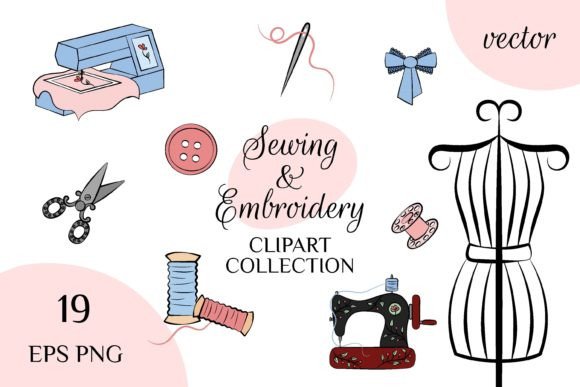
When I first opened the Sewing Embroidery PNG Clipart Collec on Creative Fabrica, I felt like I was browsing a vintage sewing basket. The collection is packed with hand-drawn-style illustrations of thread spools, scissors, buttons, pins, needles, thimbles, and sewing machines, all wrapped in a soft, nostalgic mood. Many pieces have a light watercolor texture or sketch-like finish, which makes them feel delicate and ready for handmade product designs.
Right away, I could see this working beautifully for apparel tag designs, fabric care labels, or even embroidery studio branding. The visual mood is gentle, slightly whimsical, and very much on-trend for nursery decor, kitchen towels, and patch-style gifts. Because it’s a PNG clipart collection, not a digitized embroidery file, the detail level is high—think fine lines, tiny dots for stitching texture, and subtle shading that would be tricky to replicate with thread alone. This makes it a versatile design asset for creating mockups, printable heat transfers, and even sublimation designs.
However, if you’re looking for a ready-to-stitch machine embroidery design with set stitch types, that’s not what this product is. As an embroidery designer, I immediately started thinking about how I could use these PNGs as a starting point for custom digitizing, or as printable mockup elements to showcase finished products on Etsy. The stitching personality is more illustrative than realistic, which suits handcrafted brands perfectly.
How These Illustrations Fit into Real Embroidery Projects
I constantly look for ways to add original, artistic touches to my customer orders, and Sewing Embroidery PNG Clipart Collec gave me a fresh set of ideas. While these aren’t stitch files, they can still play a huge role in a professional embroidery workflow. Here are the real project scenarios I tested mentally:
- Tote bags and sweatshirts: A crisp PNG of a tiny sewing machine or a threaded needle, printed onto heat transfer vinyl or sublimation paper, pairs gorgeously with a companion embroidered motif. I’d use the clipart for the background or accent and let the actual embroidery thread pop on top.
- Kitchen towels and aprons: The vintage button and spool illustrations are perfect for creating a coordinated “sewing kitchen” theme. I’d print the clipart onto cotton twill labels, sew them onto the items, and add a small embroidered monogram—instant boutique merchandise.
- Baby blankets and nursery decor: The soft, whimsical linework of the thread and needle elements can be turned into a delicate repeating pattern for a baby blanket’s satin edge, or used as a printable nursery wall art piece that matches an embroidered birth announcement.
- Caps and patches: While the clipart can’t be stitched directly, I’ve used similar PNGs to create embroidered patch mockups for customer approval. The buyer sees a realistic preview of the stitch placement before I digitize a custom design from scratch.
- Etsy listings and craft fair displays: I often need clean, attractive images to show how my handmade product looks in use. The Sewing Embroidery PNG Clipart Collec is ideal for creating lifestyle mockups—layering a sewing machine graphic over a blank tote photo, for example—without worrying about complex embroidery file rendering.
What I appreciate most is that the Illustrations category on Creative Fabrica means these are meant to be used as Graphics assets. They shine in digital embroidery file mockups, pattern design, and print-on-demand applications. If you’re an apparel decorator who also offers screen-printed or sublimated goods, this collection bridges the gap between embroidery and print beautifully.
Practical Use: What You Really Need to Know Before You Download
If you’re integrating Sewing Embroidery PNG Clipart Collec into your creative business, there are a few practical points to keep in mind. Since these are PNG files, not stitch files, the usual embroidery concerns—hoop size, stitch density, thread colors—don’t apply directly. But they matter a lot when you plan to digitize from these graphics or use them on products that also feature embroidery.
Creating a Professional Look on Different Surfaces
When I use clipart as a base for a custom apparel design, I always test the print quality on the actual fabric. A delicate watercolor sewing motif might look stunning on a light-colored cotton tote, but it could lose contrast on a dark fabric or textured knit. I recommend printing on a well-prepared surface or using a high-quality transfer paper. For stretchy fabric like a sweatshirt, a printed graphic needs to be properly positioned away from high-stretch areas to avoid cracking, while an embroidered element nearby can add texture and durability.
Small Details and Product Longevity
The tiny lettering and fine lines in this clipart collection are charming, but if you plan to digitize them into an actual machine embroidery design, you’ll need to simplify. Thread can’t replicate every wispy pencil mark. I often use the PNG as a loose guide, then create a cleaner running stitch or satin stitch version in my digitizing software. That way, the finished product washes well and looks intentional. For items that need frequent washing, like kitchen towels or baby blankets, I’d avoid overly dense fill stitch areas based on the clipart’s shading, and instead opt for a more open, airy interpretation.
Working with Curved Cap Surfaces
If you want to apply a sewing-themed design to a baseball cap, the clipart can help you visualize the layout before you digitize. I’d print the graphic on a clear sticker, place it on the cap, and see how the design curves. The Sewing Embroidery PNG Clipart Collec elements are small enough to fit a front panel or side patch without overwhelming the hat. Just remember: a curved surface demands a well-digitized file with proper underlay, so the clipart is a starting point, not a final stitch file.
How This Collection Can Elevate Your Brand and Product Value
As a small business owner, I’m always thinking about how a design asset affects buyer trust and product photography. The Sewing Embroidery PNG Clipart Collec has a cohesive, handcrafted feel that instantly signals “made with care.” When I use these graphics in my Etsy listing photos, the finished product looks more polished and giftable. Customers browsing for a personalized gift are drawn to that boutique aesthetic—it tells them that the item isn’t mass-produced.
I’ve noticed that incorporating consistent, themed clipart across my brand—like on hang tags, care instruction cards, and social media posts—creates a stronger visual identity. For an embroidery studio, a sewing-themed clipart collection is a natural fit. It reinforces the crafty, artisanal vibe that my customers love. And because the PNGs are easy to use, I can quickly create printable mockup sheets for craft fairs, showcasing my available designs in a way that feels curated and professional.
Moreover, when I combine these illustrations with actual embroidered samples, the perceived value increases. A customer sees a beautifully designed bundle: a tote bag with a stitch-accurate embroidery next to a matching tag printed with a sewing machine clipart. It feels like a complete, thoughtful product. That kind of presentation can justify a higher price point and encourage repeat purchases.
My Embroidery Designer Notes: A Practical Checklist
After spending time with the Sewing Embroidery PNG Clipart Collec, here’s the checklist I’d follow if I were using it for a real customer order or a new product line:
- Test on scrap fabric first. Whether you’re printing the clipart or digitizing from it, always run a test on the same material as your final product. Check for color accuracy and sharpness.
- Check thread color contrast. If you’re creating an embroidery file inspired by the clipart, pick thread colors that match the mood but also stand out on your chosen fabric. Soft pastels may disappear on beige cotton.
- Review potential stitch density. When converting a detailed illustration into a stitch file, simplify the design. Too many tiny stitches from a dense PNG can create a stiff, uncomfortable patch.
- Confirm your hoop size and placement. Use the PNG as a mockup to size the design correctly. A small embroidery machine might require a 4x4 hoop, so adjust the clipart scale accordingly.
- Compare light and dark fabric mockups. The clipart’s transparency makes it easy to layer over different backgrounds. Test how the design looks on black, navy, and white fabrics before committing to production.
- Use proper stabilizer if you’re combining print and embroidery. A printed transfer on a stretchy tee still needs a backing if you’re adding an embroidered element nearby. The clipart itself won’t affect stabilizer choice, but the overall product construction does.
- Inspect small details after stitching. If you digitize a tiny button or needle illustration, stitch it out and check for thread breaks or loss of detail. Adjust the digitizing as needed.
- Always verify the license on the Creative Fabrica product page. Since this is a Graphics resource, the usage terms for commercial embroidery products may differ from a standard embroidery file. Read the description carefully before selling finished items.
One thing I can’t stress enough: the Sewing Embroidery PNG Clipart Collec is not a ready-to-load embroidery file. It doesn’t come with stitch counts, hoop size recommendations, or thread charts. So before you buy, head to the product page and confirm the file formats, resolution, and licensing. If you’re planning to use it for commercial embroidery digitizing, make sure the license allows derivative works or resale in physical form. I always do a quick check, and it saves me headaches later.
Final Thoughts: Is It Worth a Spot in Your Design Toolkit?
For embroidery designers who also offer print-on-demand products, custom apparel mockups, or handmade brand collateral, the Sewing Embroidery PNG Clipart Collec is a genuinely useful addition. It won’t replace your digitized stitch files, but it will complement them beautifully. I see it as a design asset that helps me visually communicate ideas, create professional listings, and add a charming print element to my embroidered goods. The nostalgic, crafty mood fits right into the handmade market, and the versatility across tote bags, sweatshirts, baby items, and kitchen textiles makes it a smart pick for creative entrepreneurs.
If you’re looking for a quick way to add a sewing-themed, handmade feel to your Etsy listings, craft fair displays, or boutique merchandise, this collection is worth exploring. Just remember to test it in your workflow before finalizing any large order, and always verify the product details on Creative Fabrica to ensure it aligns with your commercial goals. In my experience, the right clipart can elevate a simple embroidered piece into a cohesive, giftable product that customers love—and that’s exactly what this collection helps me do.