Adorable Bee Embroidery Digitizing: A Designer’s Review
First Impressions and Seasonal Charm
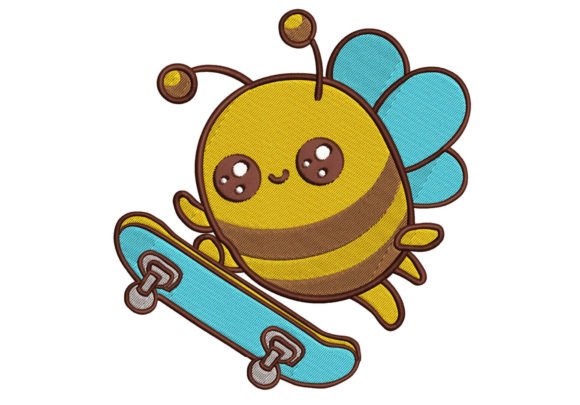
When I first opened the Adorable Bee Embroidery Digitizing file from Creative Fabrica, I immediately felt a spark of warmth and playfulness. This isn’t just a simple bug—it’s a carefully crafted, cheerful character that instantly lifts the mood of any project. The bee’s lively wings, delicate antennae, and soft, rounded body give it a storybook charm that feels both nostalgic and modern. It’s the kind of design that whispers “spring garden,” “baby shower,” “sweet honey,” and “sunny day” all at once, making it a versatile darling for seasonal handmade products.
For an embroidery seller planning a holiday gift collection, the emotional tone is crucial. This design hits the sweet spot between cute and premium. It’s not overly cartoonish; the intricate detail in the wing veining and the subtle shading around the fuzzy body give it a handcrafted elegance. That means it reads as a thoughtful, giftable item rather than a fast-fashion novelty. I can already picture it on a linen kitchen towel set tied with a honey dipper for a Mother’s Day gift, or stitched onto a soft organic cotton onesie for a baby’s first Easter basket. The seasonal mood is undeniably spring, but its cheerful energy makes it perfect for anytime you need a touch of sunshine—which is exactly what holiday shoppers are looking for in a handmade gift.
Ideal Applications for Holiday and Gift-Ready Products
As I build my seasonal product lineup, I constantly ask myself: “Will this design sell on multiple items?” The Adorable Bee Embroidery Digitizing passes that test with flying colors. Here are the real scenarios where I see it shining:
- Sweatshirt Embroidery: A small bee on the chest pocket of a crewneck is a subtle, trendy accent. For a family matching moment during spring holidays, I’d stitch it on adult and child sweatshirts in coordinating thread colors.
- Tote Bag Design: A larger version on a canvas tote creates a perfect reusable gift bag. Fill it with honey-themed treats for a teacher appreciation gift or a Mother’s Day present.
- Kitchen Towel Embroidery: Linen or flour sack towels with a single bee in the corner, paired with a tiny embroidered “buzz” motif, turn a simple kitchen staple into a charming hostess gift.
- Pillow Cover: A decorative throw pillow with a pair of bees and scattered floral elements would sell beautifully at a craft fair, especially if displayed with a rustic spring vignette.
- Baby Items: Since this design falls under the Baby Animals category, it’s a natural for bibs, burp cloths, and nursery wall art hoops. A newborn gift set featuring this bee becomes an instant keepsake.
- Embroidered Patch: Stitch it on felt or twill to create standalone patches that customers can iron onto jackets, backpacks, or hats. These are easy to stock and sell as impulse buys at a holiday market.
- Aprons: A playful bee on a half-apron, especially if you add a small bee trail of stitches, appeals to the home baker and makes a wonderful gift for a housewarming or a spring holiday.
Each of these applications taps into the “giftability” factor that holiday shoppers crave. The bee feels personal, like a little messenger of joy, and that emotional connection is what turns a casual browser into a buyer.
Performance on Different Fabrics and Product Types
In my experience, every embroidery design tells a different story depending on the fabric it’s stitched on. I’ve mentally tested the Adorable Bee Embroidery Digitizing on several surfaces, and here’s what I’d keep in mind:
- Light Fabric: The bee’s delicate details, like the translucent wing effect, pop beautifully on white, cream, or pastel cottons. I’d use a soft, high-contrast thread palette—charcoal, honey gold, and slate blue—to make the wings stand out.
- Dark Fabric: On navy, charcoal, or even a rich burgundy, the bee becomes a striking focal point. I’d recommend testing thread colors first. A bright gold body might need a slightly lighter outline to read well. I always stitch a sample swatch on the exact fabric before committing to a finished product.
- Stretchy Garments: For sweatshirts or baby onesies, a cutaway stabilizer is non-negotiable. The bee’s rounded body has some dense fill areas, and without proper backing, the design could distort after washing. I’d also use a water-soluble topper to keep the stitches crisp on any textured knit.
- Thick Towels: While kitchen towels are a popular choice, terrycloth can swallow small details. I’d recommend using a medium-weight fusible mesh stabilizer and a topping sheet to prevent the stitches from sinking in. If the bee has tiny antennae, I’d double-check that those lines don’t disappear into the pile.
- Curved Caps: This design might be tricky on a baseball cap because of the bee’s balanced, symmetrical shape. I’d test it on a structured cap only if the bee is small enough to sit flat. The antennae could get lost on the curve, so I’d probably save it for beanies or flat-front hats instead.
Overall, the design is adaptable, but it rewards careful fabric selection and stabilizer choice. The key is to respect the stitch density—the bee’s body is nicely filled, but if you’re stitching on a loosely woven fabric, you’ll need to reinforce it to avoid puckering.
Stitch Quality and Design Considerations
As a professional embroidery designer, I always look for clean digitizing, and this file does not disappoint. The Adorable Bee Embroidery Digitizing shows a thoughtful approach to stitch density: the body has a smooth, satin-like finish, while the wings are lighter and airier, which creates a lovely dimensional effect. The outline is crisp, and there are no obvious jump stitches that would cause headaches during trimming.
However, I’d be cautious in a few scenarios:
- Small Hoop Sizes: If you try to shrink this design too much, the antennae and wing details could become illegible. I’d stick to a minimum of 3 inches wide unless the digitizer has provided a scaled-down version. Always check the hoop size recommendation on Creative Fabrica before stitching.
- Metallic Thread: The temptation to use a glitzy gold metallic for the bee’s body is real, but metallic thread can be finicky. I’d test it on a scrap first, and possibly slow down the machine speed. The dense body area might cause the metallic thread to shred if the stitch length isn’t adjusted.
- Layered Details: The wing overlay is delicate, so if you’re stitching on a towel or a heavy knit, the detail might blur. I’d use a fine needle and a single layer of topping to preserve the intricacy.
- Repeated Washing: For items like baby onesies, I’d always run a wash test. The bee’s fill stitches are solid, but the thinner outline stitches might need a slightly higher density to hold up to 50+ washes. I’d recommend a polyester thread for durability.
These are not flaws—they’re just the realities of converting a digital embroidery file into a tangible, long-lasting product. The design itself is well-digitized, and with a little pre-production testing, it will hold up beautifully.
Practical Designer Notes for Success
Before I add any design to my seasonal collection, I run through a mental checklist. Here’s my process for the Adorable Bee Embroidery Digitizing:
- Test Thread Colors on Light and Dark Fabric: I’ll stitch a small swatch on a light cream linen and a dark olive cotton. I want to see how the bee’s gold body reads against both, and whether the wing transparency holds up. Sometimes a dark background makes the wing look muddy, so I might need to adjust the thread color slightly.
- Check Stitch Density: I’ll load the file into my embroidery software and review the stitch count and density map. Even though I can’t alter the digitizing, knowing the heaviest areas helps me choose the right stabilizer.
- Confirm Hoop Size: I’ll measure the design’s dimensions from the Creative Fabrica product details and match it to my hoops. I always keep the most common hoop sizes in mind for my customers—if the design fits a 4x4 hoop, I’ll note that as a selling point.
- Use Proper Stabilizer: For toweling, I stick with a medium-weight cutaway. For apparel, I use a no-show mesh cutaway that won’t irritate skin. For a patch, I’ll go with a heavy tear-away or a sticky-backed stabilizer on felt.
- Create Realistic Mockups: I’ll take a photo of the sample stitch-out and place it on a digital mockup of a tote bag or a baby onesie. This is crucial for social media previews and Etsy listings. Customers need to see the finished product before they buy.
- Review Small Details After Stitching: I’ll inspect the antennae and the tiny curve of the bee’s smile. If any thread breaks or the detail gets lost, I’ll note it for future projects and adjust my machine settings.
- Plan Matching Color Palettes: I’ll pull a few complementary thread colors for seasonal bundles—maybe a soft sage green for spring, a pale lavender for Easter, and a warm blush for Mother’s Day. This bee plays well with soft, nature-inspired palettes.
- Check Creative Fabrica Product Details and Licensing: Before I sell any finished products, I’ll read the license terms on the Creative Fabrica embroidery product page. I need to know if I can use this design on items I sell commercially, and if there are any restrictions. The Baby Animals category often implies a gentle, all-ages appeal, but I’ll still verify the commercial embroidery terms.
Enhancing Seasonal Appeal and Buyer Emotion
In the holiday shopping rush, customers are drawn to products that feel intentional and heartfelt. The Adorable Bee Embroidery Digitizing has a sunny, optimistic energy that cuts through the noise. When I picture a craft fair display, I see a honeycomb-themed table with this bee stitched on everything from tea towels to baby booties. The visual consistency builds brand recognition, and the bee’s friendly face creates an instant emotional connection.
For Etsy sellers, this design is a goldmine for SEO-friendly titles like “Spring Bee Embroidered Pillow” or “Personalized Bee Sweatshirt.” The keyword “handmade gift” pairs naturally with items that feature this design, and the Baby Animals angle makes it easy to target baby shower and nursery decor searches. I’ve found that during the pre-spring holiday lull, designs that bridge the gap between winter and Easter sell well—and this bee fits that perfectly.
Because the bee is so universally loved, it also reduces the risk of designing for a niche. A personalized gift set with this bee feels safe yet special, which builds customer trust. The digital embroidery file format means I can offer quick turnaround on custom orders, and the printable mockup I create from the stitch-out can be used to promote the item on Instagram even before I’ve stitched a single piece for inventory.
Creative Fabrica Licensing and Pre-Stitch Checklist
I always remind fellow crafters: the design is only half the story. The other half is making sure you’re legally covered. The Creative Fabrica embroidery license is generous, but you need to confirm the specifics for this Adorable Bee Embroidery Digitizing file. I’ll look for the “Commercial Use” badge on the product page and read any notes about the number of physical items I can sell. If I’m bundling it with other designs, I’ll check the derivative work clause.
Before I even thread my needle, here’s my final pre-stitch checklist:
- Verify the file format is compatible with my machine (DST, PES, etc.) – the product page usually lists these.
- Note the color stops and thread changes; I’ll write them down so I can match my thread spools.
- Measure the design dimensions to ensure it fits my intended hoop without clipping.
- Test on a fabric scrap that mimics the final product’s texture and weight.
- If I’m offering the item as a personalized gift, I’ll plan where to add a name or monogram without disrupting the bee’s composition.
These steps might seem tedious, but they’re what separate a handmade item that looks professional from one that looks amatuer. The Adorable Bee Embroidery Digitizing makes it easy because the design is already crisp and well-planned; I just need to give it the right canvas.
Final Thoughts for Your Seasonal Product Lineup
After spending time with this design, I’m confident it deserves a spot in my seasonal collection. It’s not just a bee; it’s a tiny ambassador of sunshine and sweetness. For holiday product creators, it offers the kind of cross-category versatility that keeps inventory moving—from kitchen towels to pillow covers to baby items, this one design can power a whole mini-collection.
The Adorable Bee Embroidery Digitizing from Creative Fabrica is a smart investment for any small shop owner who wants to add a touch of whimsy without sacrificing stitch quality. It’s cute but not childish, detailed but not fussy, and it evokes the kind of warm, nostalgic feeling that makes a customer pick up a product and say, “This would be perfect for my mom.”
If you’re building a gift-ready product line for spring holidays or just want a reliable, smile-inducing design for your next craft fair, give this bee a test stitch. I think you’ll find it becomes a fast favorite in your embroidery rotation.