Gold Embroidery Sequin Fabric Paper: A Designer’s Review
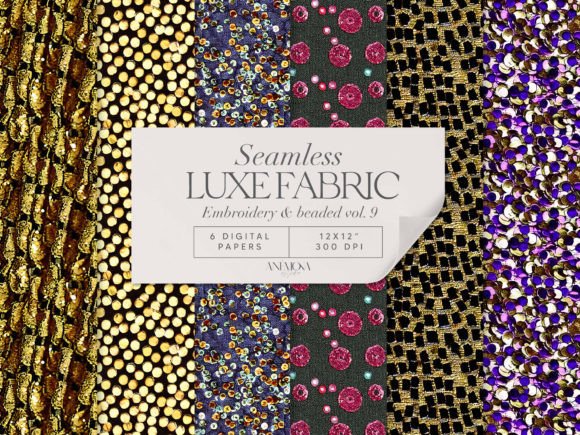
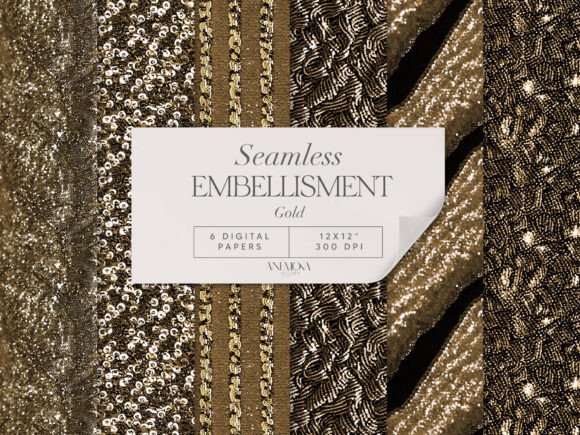
When a digital paper set lands on my desk claiming to blend gold embroidery with sequin textures, I know it’s time to put on my embroidery designer hat. The Gold Embroidery Sequin Fabric Paper from Anemona Estudio arrives as six luxury JPG files, each 3600 pixels wide, 300 dpi, RGB, and seamlessly tileable. For a small business owner, handmade brand, or Etsy seller, this isn’t just a pretty pattern. It’s a design asset that can shape how customers see your merchandise—from embroidered patches and aprons to cap accents and totes. Let me walk you through how this graphic performs when you’re serious about branded merchandise, not just decoration.
First Impressions: Visual Personality and Brand Potential
Right away, the design feels elegant yet playful. The gold tones catch light like real sequin fabric, and the embroidery-like texture adds a handmade, premium touch. It’s not overly rustic—it leans more toward boutique chic. If you run a small café, a florist studio, a pet brand, or a creative bakery, this pattern could elevate your product labels, tissue paper, or even digital mockups. The seamless repeat means you can scale it across tote bags, cap visors, or uniform accents without awkward breaks. For an embroidery designer, the first test is always: Does this inspire a stitchable concept? The answer here is a confident yes. The gold-on-fabric illusion gives you a launchpad for custom machine embroidery design ideas that feel rich and tactile.
How This Graphics Paper Performs in Real Business Use
I always test a Patterns asset against the kind of jobs my clients request. A local bakery might want an embroidered patch for their aprons. A handmade soap studio might need a luxury label. A boutique clothing brand could use this gold sequin texture as a sleeve accent inspiration. Below are the key scenarios where the Gold Embroidery Sequin Fabric Paper truly shines.
Embroidered Patches and Branded Merch
Small businesses love patches. They’re affordable, collectible, and carry brand identity instantly. When I look at this digital paper, I see a background that can be digitized into a patch design—layering gold thread over a textured base. The 300 dpi resolution keeps the sequin details crisp even when you scale down for a 3-inch patch. However, for tiny lettering or tight outlines, you’ll need to simplify. The intricate gold texture might turn into a muddy mess if you try to convert every sparkle into stitches. So I’d use this paper as a brand identity reference, then build a cleaner embroidery file that captures the spirit without the density.
Staff Uniforms and Aprons
Imagine a café apron with a chest logo that mimics this gold sequin pattern. Digitizing it for a left-chest embroidery would require careful reduction. You’d want to test the design in black and white first to see if the contrast holds. The gold hues translate beautifully to metallic threads, but on dark uniforms, the thread colors need to pop. I’d run a sample on a similar fabric texture—maybe a cotton twill—and check the stitch density. A dense pattern on a small hoop size (like a 4x4) can pucker. So I’d advise using a sturdy cutaway stabilizer and a topper if the fabric has a nap. The Gold Embroidery Sequin Fabric Paper gives you that luxurious visual, but the finished product depends on your digitizing choices.
Caps, Tote Bags, and Work Shirts
Curved surfaces like cap fronts are tricky. The seamless repeat of this paper is a major plus: you can wrap the gold sequin texture around a visor mockup and see exactly how it flows. For a tote bag, the large 3600px width lets you create a full-panel print, then use that as a guide for a matching embroidered patch. I often use such Graphics as printable mockups to show clients what the custom apparel will look like before I stitch a single thread. The commercial embroidery community will appreciate that this file is RGB, so you’ll need to convert to a thread color palette—rayon or polyester metallics are your friend here.
Where You Need to Use Caution
No design asset is perfect for every use. Here’s where the Gold Embroidery Sequin Fabric Paper demands a bit of restraint.
- Small patch sizes: Below 2 inches, the sequin detail becomes noise. Simplify the design or use it as a border texture.
- Curved surfaces: On caps, avoid placing the pattern directly over seams. The repeat will distort.
- Tiny lettering: The gold effect might overpower thin text. Keep lettering bold and separate.
- High stitch density: Digitizing the full sequin look could create a stiff, uncomfortable patch. Use it sparingly.
- Dark uniforms: Gold thread on black fabric can appear dull. Test thread colors on the actual material.
- Frequent washing: If the pattern is used as a printed label, confirm the printing method can handle industrial laundry. For embroidery, metallic threads can wear; choose a high-quality polyester gold.
How This Pattern Shapes Brand Identity and Customer Trust
When a small business invests in merchandise, they’re not just buying a logo. They’re building brand identity. The Gold Embroidery Sequin Fabric Paper adds a layer of perceived value. A customer picks up a tote bag with a gold sequin-inspired patch and immediately thinks “premium.” It’s a visual cue that says the business cares about details. This is crucial for handmade product sellers, boutique owners, and Etsy brands. The consistency of using this pattern across labels, tissue paper, and digital mockups creates a visual consistency that builds recognition and professionalism. Even if you only use it as a printable mockup for client approval, it elevates the presentation and builds trust before the first stitch is made.
Practical Embroidery Designer Notes
Before you commit this Graphics design to a commercial run, follow these steps. They’re the same ones I use in my studio for every digital embroidery file project.
- Test in black and white: Convert the gold paper to grayscale. If the texture still reads as a clear pattern, it will translate well to embroidery.
- Check small patch size: Scale the image to 2 inches and see if the sequin effect holds. If it blurs, simplify.
- Review thread color contrast: Gold is tricky. Pick a metallic thread that matches the warmth of the paper. Order a sample card.
- Inspect spacing: The seamless repeat might hide tiny gaps. Enlarge and look for breaks where stitches could separate.
- Confirm hoop size: Make sure your design fits a standard hoop without splitting. For caps, consider a 270-degree frame.
- Test on real fabric: Always stitch a sample on the exact fabric you’ll use. The fabric texture can change how the gold reads.
- Use proper stabilizer: For dense gold areas, a medium-weight cutaway is a safe bet. Add a water-soluble topper for towels or fleece.
- Create a mockup for client approval: Use the paper as a printable mockup placed on a tote bag or apron photo. This avoids surprises.
- Compare beside other design assets: Don’t use this pattern in isolation. See how it looks next to your main logo and other branding elements.
- Confirm commercial licensing: The product description says “Perfect illustrations for all designs,” but always check with Anemona Estudio about commercial embroidery use and any restrictions on reselling embroidered goods. Never assume.
Integrating the Gold Sequin Element into Your Product Line
For a florist, this pattern could become a sleeve patch on a work shirt, paired with a simple flower silhouette. A bakery might use it as a background for a cake-themed patch on a canvas tote. The key is to treat the Gold Embroidery Sequin Fabric Paper as a supporting actor, not the star. Let it enhance your main logo, not compete. If you’re selling custom apparel, offer this as a “premium texture” upgrade for an extra fee. The high resolution and seamless nature mean you can even print it directly onto fabric for a mixed-media look—embroidery plus printed gold—which is a growing trend in boutique merch.
Final Thoughts for Small Business Owners
As an embroidery designer, I’m always looking for design assets that can bridge the gap between digital art and stitched product. The Gold Embroidery Sequin Fabric Paper from Anemona Estudio is a versatile addition to your toolkit. It’s not an embroidery file—you’ll need to digitize or use it as a visual guide—but it gives you a strong foundation for creating brand identity pieces that feel luxurious and handmade. Whether you’re designing an embroidered patch for a pet brand, an apron embroidery for a coffee shop, or a tote bag design for a craft fair, this pattern can help you stand out. Just remember to test thoroughly, simplify wisely, and always keep the finished product in mind. When a customer runs their fingers over that gold thread and feels the texture, they’ll know your brand is something special.