Mushroom House Embroidery Design: Boutique Sweatshirt Review
When a new machine embroidery design arrives in my digital library, I always test it mentally against a real-world project first. This time, I’m imagining a limited sweatshirt drop for a small boutique brand that leans into whimsical, nature-inspired kidswear. The Mushroom House Embroidery Design immediately caught my attention — not just because it’s a colorful mushroom house, but because it promises that fairy-tale charm that buyers of handmade children’s clothes crave. I’m reviewing it as if it’s about to go onto a set of premium sweatshirts, so every stitch matters.
First Impressions and Design Mood
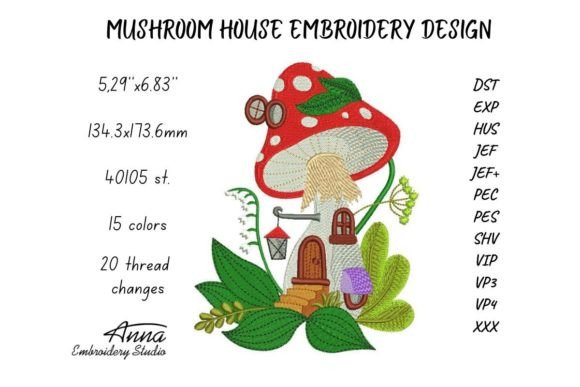
Opening the digital embroidery file, the mood is playful and storybook-like. The product description says “Colorful mushroom house for gnome or forest fairy” — and that’s exactly the vibe. The house itself feels like a character: a cozy, crooked roof, a tiny door, and likely some magical details like window frames or chimney swirls. It’s not a minimal line-art piece; it reads as a filled, decorative motif that would pop beautifully on a sweatshirt embroidery project. The design assets suggest a balanced mix of satin stitches for outlines and fill stitches for the mushroom cap, so the texture will have real depth. I’d call it rustic-cute, with a touch of woodland whimsy — perfect for a handmade product line that wants to feel both premium and approachable.
Sweatshirt Application: Placement and Scale
For a hoodie design or crewneck, placement is everything. I can see this Mushroom House Embroidery Design sitting perfectly on the left chest of a toddler or youth sweatshirt, roughly 3.5 to 4 inches wide. For an adult oversized hoodie, I’d scale it up to 5 or 6 inches and center it on the chest, or even use it as a back design with a subtle sleeve accent. The description mentions it’s “good for kids clothes,” which tells me the stitch density is manageable at smaller sizes, but I’d still test a sample on a scrap of fleece before committing a full run. As a custom apparel piece, a front-center placement on a neutral oatmeal or cream sweatshirt would let those thread colors shine. For a bolder statement, a dark forest green or navy base would make the mushroom house glow like a lantern in the woods.
Placement Ideas for Boutique Merchandise
- Left chest pocket area on a zip-up hoodie
- Centered on a pullover crewneck for a signature sweatshirt embroidery look
- Wrist or upper-sleeve accent on a raglan-sleeve tee or sweatshirt
- Back yoke design above a woven label on a heavyweight hoodie
Thread and Color Considerations
The word “colorful” in the title is a hint that this design uses multiple thread colors, likely with stops and color changes. I’d expect a vibrant red or burnt orange mushroom cap, a soft brown or grey stem, maybe mossy green accents, and delicate pastel flowers or a blue door. That palette works beautifully on natural cotton blends, but if you’re stitching on a dark fabric, you’ll want to check that the darkest thread colors still contrast. I always recommend doing a test stitch-out on the exact fabric you’ll use for the final product. Adjusting one or two thread shades can make a huge difference when the finished product goes under a product photo light. For an Etsy seller or small shop, that attention to color detail is what builds buyer trust and repeat customers.
Fabric and Stabilizer Demands
Any embroidery file destined for a sweatshirt needs to be evaluated against fabric texture. French terry and fleece have a nap that can swallow fine stitches, so I’d pair this design with a sharp needle and a heavy cutaway stabilizer. The description doesn’t specify a hoop size, but most mushroom house motifs of this style fit a 4x4 or 5x7 hoop. Before production, confirm the exact hoop size and stitch count — the product description says “comes with multiple e,” which likely means multiple embroidery file formats and possibly multiple sizes. That’s a huge plus for a commercial embroidery setup, because you can choose the best version for each garment. On a thick sweatshirt, too-dense stitching can feel stiff and boardy, so I’d look for a well-digitized design with moderate stitch density that keeps the fabric soft.
Durability and Washing for Commercial Apparel
Selling a handmade product means the embroidery has to survive washing, drying, and kid-level wear. The Mushroom House Embroidery Design is described as suitable for pillows and tote bags too, which tells me it’s digitized with enough coverage to hold up on home décor items. That’s a good sign. For kids’ clothes, I’d still run a wash test: turn the sweatshirt inside out, cold cycle, low tumble dry. If the design has tiny satin-stitch details, they need to be well-anchored. I’d also recommend a soft backing (like a no-show mesh) on the inside of the sweatshirt so it doesn’t irritate sensitive skin. This is exactly the kind of pre-production check that separates a boutique item from a generic print-on-demand product.
Branding and Product Value for Small Shops
When you’re building a boutique brand, every design asset tells a story. The Mushroom House Embroidery Design isn’t just a decorative element — it’s a miniature world. It invites parents to imagine a gnome or fairy living there, and that emotional connection adds perceived value. For an Etsy seller, a sweatshirt featuring this kind of embroidery can be photographed with moss, wooden toys, or a storybook to create a cohesive printable mockup or lifestyle image. The design itself becomes a brand signature. I’d suggest using it consistently across a small collection: a hoodie, a matching kid’s tee, and a tote bag, all tied together by the same mushroom house motif. Customers start to recognize the style, and that visual recognition drives engagement and repeat sales.
How It Elevates an Online Shop
- Distinctive, recognizable imagery that stands out in search results
- High perceived value through detailed, colorful embroidery
- Opportunity for storytelling in product descriptions and social media
- Versatility across multiple product types (sweatshirt, hoodie, pillow, tote)
Stitching Personality and Design Detail
Looking closely at the likely digitizing style, I’d expect the roof to have a textured fill, maybe with a slight wave to mimic shingles or mushroom texture. The door might be a satin-stitched rectangle with a tiny split-stitch window. If there are flowers or grass at the base, those could be delicate single-color accents. The overall stitching personality feels cheerful and slightly vintage, like a 1970s children’s book illustration. That translates into a finished product that feels warm and nostalgic — exactly the kind of custom apparel that parents love to photograph and share. For a small shop product, that organic social media presence is gold.
Practical Designer Concerns
Before committing to a full production run, I’d want to clarify a few points from the product description. It says “comes with multiple e,” which is almost certainly “multiple embroidery file formats” — but I’d check exactly which formats are included. Some designers need DST, others PES or EXP, and you don’t want to be stuck converting. Also, while the design is described as good for kids clothes, I’d verify the smallest size available. If it’s only a large version, shrinking it too much might close up fine details. The stitch density on a 3-inch-wide version could become problematic if there are tiny elements. I’d request a stitch-out photo or test it on a scrap of French terry before ordering 50 blanks. The embroidery file itself should come with a color chart, but I’d still map thread colors to my own brand palette for consistency.
Final Notes Before Production
The Mushroom House Embroidery Design is a strong candidate for a boutique sweatshirt collection. Its whimsical, colorful personality fits the current demand for nostalgic, story-driven kidswear. It feels premium enough to be the hero piece of a drop, yet versatile enough to become a recurring brand motif. I’d pair it with a soft, brushed fabric in oat, sage, or dusty rose, and use a matching thread palette that feels gentle and organic. The design’s ability to work on pillows and totes also means you can upsell coordinating items. For a commercial embroidery shop or a home-based Etsy seller, this is a digital asset that can pay for itself many times over if you treat it with the care it deserves — test your stabilizer, nail your thread colors, and photograph it beautifully. The Mushroom House Embroidery Design isn’t just a file; it’s a little piece of magic waiting to be stitched onto something cozy.